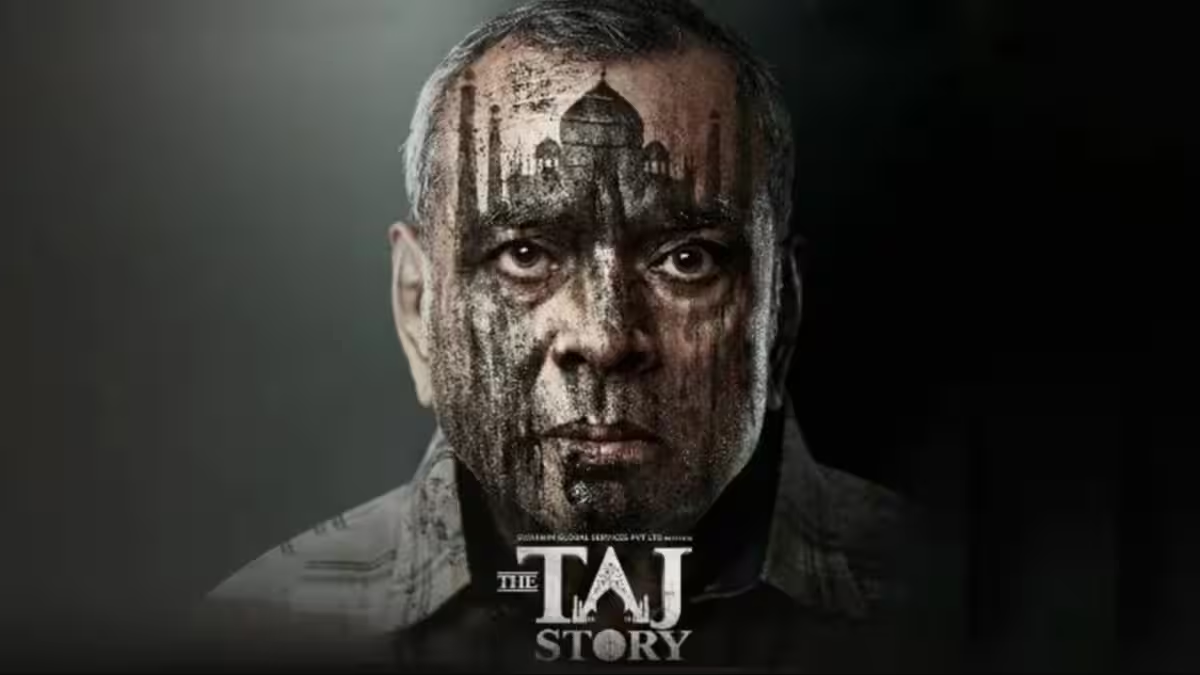
Mumbai: Released theatrically on October 31, 2025, The Taj Story is a Hindi-language courtroom drama directed by Tushar Amrish Goel and headlined by Paresh Rawal in a performance that has drawn attention even from critics who were otherwise less enthusiastic about the film. Running approximately 166 minutes, the film combines legal drama, historical debate, and personal struggle while exploring one of India’s most iconic monuments through a highly controversial narrative framework.
Story Overview
The film follows Vishnu Das, a veteran tourist guide at the Taj Mahal whose life is upended after a video of an emotional public outburst goes viral. In the video, he questions widely accepted historical accounts related to the monument, leading to professional consequences and social backlash.
Determined to pursue what he believes is the truth, Vishnu files a Public Interest Litigation (PIL), setting off a courtroom battle that forms the backbone of the narrative. Through legal arguments, expert testimonies, historical references, and personal conflicts, the film examines competing interpretations of history while highlighting the human cost of public controversy. Zakir Hussain plays the opposing counsel in a series of extended courtroom confrontations.
What Works
The film’s strongest asset is Paresh Rawal, who delivers a committed and persuasive performance as Vishnu Das. He brings sincerity, conviction, and occasional humor to a role that requires him to carry much of the film’s emotional and dramatic weight. His screen presence helps sustain audience interest, particularly during the lengthy courtroom sequences.
Visually, the film benefits from impressive shots of the Taj Mahal and attempts to enhance certain historical recreations through digital effects. The courtroom-drama format also provides a structured setting for presenting competing viewpoints and exploring a topic that continues to generate public debate.
Viewers interested in legal dramas and historical controversies may find the film’s premise engaging, especially during its opening sections, where personal stakes and curiosity drive the narrative forward.
Areas That Divided Critics
While the film’s ambition has been acknowledged, many reviewers felt that its nearly three-hour runtime affected the pacing. Several critics noted that the courtroom proceedings become repetitive in the latter half, reducing dramatic tension and narrative momentum.
Reviews also frequently pointed to weaknesses in the screenplay, including limited development of supporting characters and an overreliance on lengthy exposition. Some critics argued that the film spends more time advancing its central thesis than exploring the complexities surrounding the subject matter.

The film’s historical claims became the focal point of much of the critical discussion. Mainstream reviewers and historians who commented on the film argued that several of the alternative theories presented have previously been challenged or disputed by academic scholarship. Critics from a number of publications described the film as one-sided and questioned the strength of the evidence presented within the narrative. Supporters of the film, however, praised it for encouraging debate and challenging established interpretations, viewing it as a bold attempt to explore alternative perspectives.
Reception
Critical response was largely mixed to negative, with many reviewers praising Paresh Rawal’s performance while expressing reservations about the film’s execution, pacing, and historical approach. Audience reactions proved more polarized. Supporters appreciated the film’s willingness to raise controversial questions, while detractors felt it lacked nuance and persuasive storytelling.
The divided response reflects the broader public debate surrounding the themes explored in the film, making it one of the more discussed historical dramas of its year.
Final Verdict
The Taj Story is best viewed as a courtroom drama designed to spark discussion rather than provide definitive answers. Its greatest strength lies in Paresh Rawal’s committed performance and its willingness to engage with a contentious subject. However, its extended runtime, repetitive legal proceedings, and divisive interpretation of history may limit its appeal for some viewers.
Those interested in issue-based cinema, courtroom narratives, or debates surrounding historical interpretation may find the film worth watching. Others looking for a tightly structured drama or a more balanced exploration of the subject may come away less satisfied.
Rating: 2.5/5
Ultimately, The Taj Story succeeds more as a conversation starter than as a fully compelling cinematic experience, leaving audiences to decide where they stand on the questions it raises.